
July 22, 2026
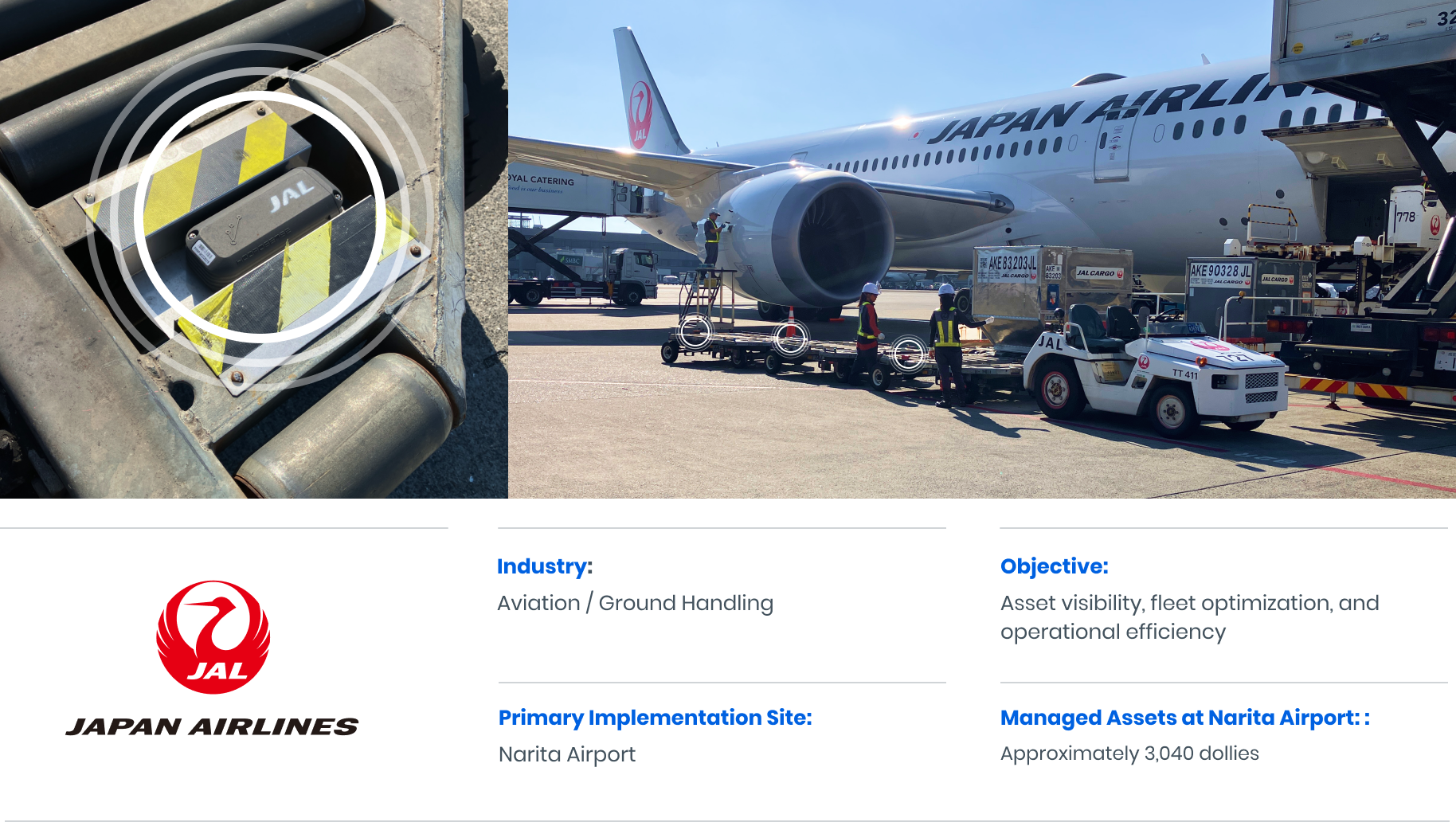
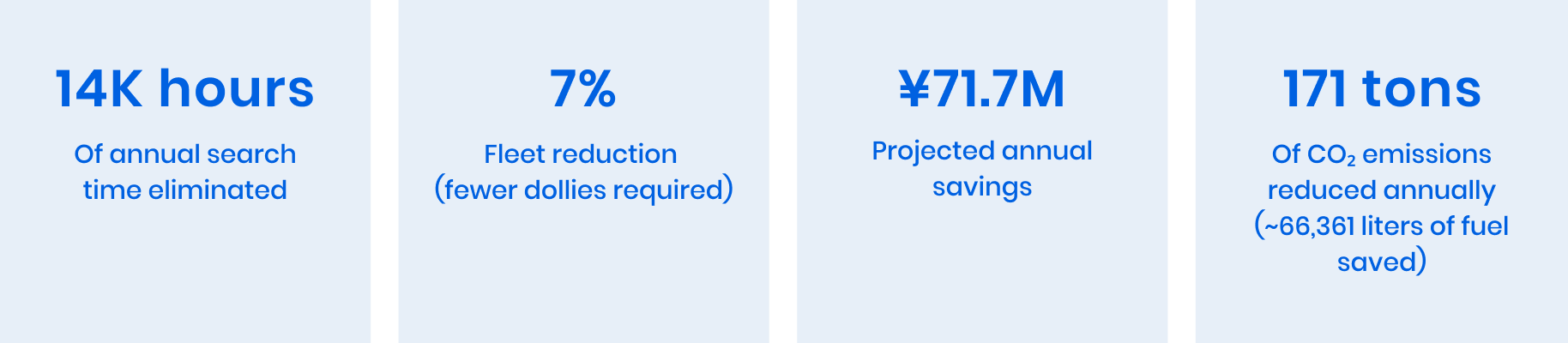
By implementing Hoopo's Fleet Intelligence Solution across its fleet of 3,040 dollies at Narita International Airport, Japan Airlines reduced annual dolly search time by an estimated 14,000 hours, right-sized its dolly fleet by approximately 7%, and projects annual cost savings exceeding ¥70 million.
Managing more than 3,000 mobile assets (dollies used to transport cargo and baggage containers) in a busy international airport environment requires precise coordination and real-time operational management. As operations grew in scale and complexity, asset visibility became a strategic priority.
Deployment of the hoopoSense tracking devices began in December 2023 and was completed in approximately three months, providing real-time visibility across the entire dolly fleet at Narita Airport.
By digitizing the management of Ground Support Equipment (GSE) dollies at one of Japan's leading international airports, Japan Airlines has established a data-driven operational foundation that supports greater efficiency, reduces unnecessary equipment movement, and lowers environmental impact.
Japan Airlines Co., Ltd. is one of Japan's leading airlines, operating an extensive domestic and international network. At Narita International Airport, a major international hub, JAL manages approximately 3,040 dollies used to transport air cargo and baggage containers.
Large-scale and complex airport operations require strong coordination, rapid decision-making, and accurate asset management. As part of its digital transformation strategy, Japan Airlines launched a dolly visibility project to optimize its ground operations.
Operational Challenges
Narita Airport covers a vast operational area with multiple dolly storage locations. Without real-time visibility, locating available equipment required physically searching across the airport. Given the strict time constraints of airport operations, this reduced operational efficiency and created additional coordination effort.
Cost-Related Challenges
Extended search times resulted in additional vehicle movement throughout the airport, increasing fuel consumption and environmental impact.
As operations became more complex and performance requirements increased, implementing a data-driven visibility solution became essential to support more sustainable and efficient ground operations.
Deployment of the Hoopo Solution began in December 2023 and was completed across all 3,040 dollies within approximately three months.
Each dolly is equipped with an industrial IoT device called the hoopoSense tracking device. Designed for outdoor airport environments, the device provides highly accurate real-time location and container load status. Its long battery life helps minimize maintenance costs.
The operations team can monitor the following in real time through Hoopo's web management platform:

Furthermore, Japan Airlines leveraged Hoopo's API to develop its proprietary asset management system, DOLYS.* Built on Hoopo's real-time data, DOLYS was designed as a simple and practical system tailored to JAL’s operational requirements.
*DOLYS is the name of Japan Airlines' proprietary asset management system.
Field operators use tablet devices to search for and verify dolly locations. The dashboard provides real-time visibility into:
Advanced filtering enables quick decision-making and improves operational responsiveness.

“The Hoopo Solution provides reliable and consistent data that enables us to accurately understand the location and utilization of our ground support equipment (GSE). By reducing search time on the ground, we expect to improve operational efficiency and on-time performance at Narita Airport while significantly increasing dolly utilization.”

Japan Airlines, Airport Operations Manager
By implementing real-time tracking, Japan Airlines aims to transition from search-based to data-driven operations, giving ground teams the visibility to make faster and more confident decisions.
Operational Efficiency Improvement
These figures are based on JAL’s internal operational analysis conducted before and after deployment. The results reflect stronger coordination across ground teams and a meaningful reduction in unnecessary tasks.
Cost Reduction
Real-time asset visibility enables more accurate fleet allocation while reducing unnecessary equipment movement.
Environmental Impact Reduction
By reducing unnecessary vehicle movement and optimizing fleet utilization, JAL expects to achieve measurable environmental benefits alongside improved operational efficiency.
Building on the successful deployment at Narita Airport, Japan Airlines plans to further leverage real-time data to optimize equipment allocation and improve operational efficiency.
This initiative demonstrates the flexibility of the Hoopo Solution and the value that asset visibility brings to complex airport environments. By using the data collected to continuously improve daily operations, Japan Airlines aims to further enhance operational efficiency and strengthen data-driven operational planning.
This initiative represents an important step in Japan Airlines' digital transformation of airport operations.